Set up properly.
The right categories, services named like your pages, hours, photos and a description that says what you do and where.
I set your Google profile up properly, then keep it fresh every month or every week.
 I look forward to working with you.
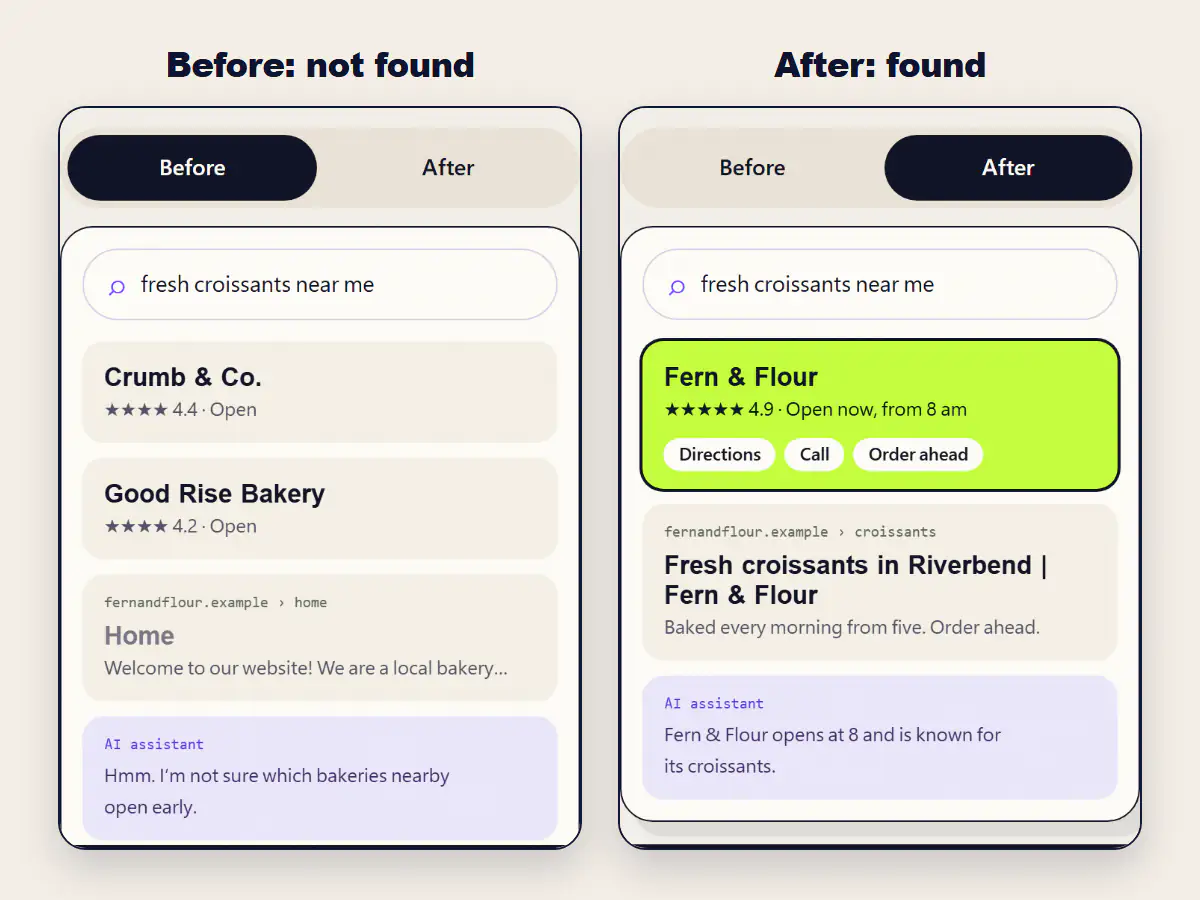
The right categories, services named like your pages, hours, photos and a description that says what you do and where.
A Google post every month on Silver, every week on Gold, with your real photos.
I reply to your reviews, the good ones and the hard ones, in your voice.
On Gold, spam businesses that show up above you get reported to Google.
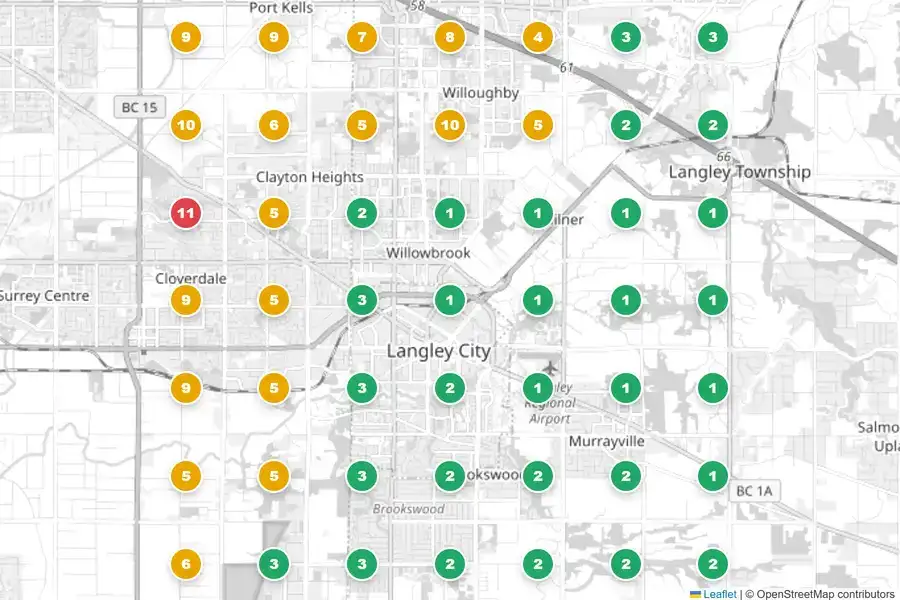
My Google Maps check
Safeguard Martial Arts, for “karate” around Langley. I check the map from 49 spots around your business, not just from one.
Bee Beauty Cosmetics · Port Moody
In late October, Bee Beauty was second on Google Maps for a makeup artist search in Port Moody, and third in Coquitlam.
Her websiteIt shows where you land on Google Maps today, from every side of town.
Categories, services, hours, photos and description, in one go.
Posts, photos and review replies, every month or every week.
Every post and every change, in your client portal.
What actually moves a Google profile, and what doesn’t.
Google says its local results come down to relevance, distance and prominence: how well your profile matches the search, how close you are to the person searching, and how well known you are. You can work on two of the three.
Distance counts for more than most owners expect. In late October, Bee Beauty was second in the Port Moody map results and third in Coquitlam’s, but missing from Vancouver’s, even with more reviews than the businesses at the top there. Close to home, a good profile wins. Further out, your website’s pages have to do the work.
The first category on your profile is the strongest clue Google has about what you do. Whitespark’s 2026 survey of local search experts ranks it the number one factor for the map results. Pick the most specific one that fits your main service: a nail salon, not just a salon.
Extra categories help when they’re real. Add one for each core service you actually offer, never one per product, and change them rarely: Google can ask you to verify the profile again when you do.
Under each category, Google lets you list services. I name every one exactly like a page on your website, so what the profile promises, the site proves. Curveball’s own profile lists 30 services, and every one is backed by a page on this site. Safeguard’s lists 20.
Only list what you really do. Google treats services you don’t offer as misleading, and it can cost you your spot. Safeguard took jiu-jitsu off its profile for exactly that reason.
Google’s AI answers read the facts on your profile: parking, accessibility, payment types, hours, prices. A missing one can leave you out of an answer, so I fill in every attribute that’s true and set holiday hours ahead of time.
The description says what you do, where and for whom, in plain words, with no links and no sales pitch. It also says what’s current, because Google’s AI summary of a profile can still repeat services you stopped offering years ago, picked up from old reviews.
Posts barely move rankings: the same survey puts how often you post at 148th of 187 factors. They’re for the people already looking at your profile, as proof you’re open, busy and real, with a button to the right page. So I keep them short: a recent job, a real photo, one link.
Photos work the same way. Real pictures of your work, your place and your people decide who gets the tap. One trick I skip: tagging photos with locations or keyword file names. Google strips that data when you upload, and tests found no effect on rankings.
I reply to every review, the glowing ones and the hard ones, in your voice. A thank-you that mentions the actual job reads like a person, not a template. A calm reply to a bad review is written for the next customer reading it, not just the one who left it.
What I won’t do is buy, swap or write reviews, or offer anything in return for one. Fake reviews get deleted, and the profile behind them can be suspended. The honest way to more of them is asking every happy customer, with a short link that opens straight to the review box.
Anyone can suggest a change to your profile, and Google publishes it after four days if nobody says no. Hours, phone numbers and even the map pin can move this way. Google also adds links nobody asked for, like booking or menu links from other websites.
So I read Google’s “does this look right?” emails, check the pin, take off links that shouldn’t be there, and look at who’s above you. Fake listings and names stuffed with keywords get reported through Google’s complaint form, with screenshots.
Moving, renaming or changing your main category can send a profile back through verification. Today that usually means a short video: one continuous recording of the sign outside, the inside, and proof you run the place, like unlocking the door. Curveball’s own profile asked for one when I moved to Langley.
The rule while it’s pending is simple: change nothing. Edits during a review can hold it up, and until it passes you can’t post, while new edits wait to be shown.
I never write, buy or swap reviews.
You own it. I’m added as a manager, and you can remove me any time.
Stop with 30 days’ notice. There’s no contract.
From $99 a month, with your website looked after too.
It’s your listing on Google Search and Google Maps: your hours, photos, reviews and the buttons to call or get directions. For many local businesses it’s the first thing a customer sees.
Yes. Google renamed Google My Business to Google Business Profile in 2021. Same listing, new name.
No, the profile itself is free from Google. The work is keeping it right and busy, and that’s the part I do.
Silver ($99 a month) keeps your profile right, replies to your reviews and adds a Google post every month. Gold ($199 a month) posts every week, tracks where you rank and adds a full SEO plan.
Nobody honest can write or buy them for you. Google removes fake reviews and can suspend the profile. I make leaving one easy with a short review link, and I answer every review so customers see you care.
Some changes show within weeks, others take months, and how close the searcher is always matters. Nobody can promise the top spot, so be wary of anyone who does.
No. If you work from home or go to your customers, Google lets you hide your address and show the areas you serve instead.
For local searches, it’s the biggest piece. It’s what puts you on Google Maps and in the map results at the top of Google, and Google reads your website alongside it. For searches that have nothing to do with a place, your website does the work on its own.
Reply to every one, soon and in your own voice. Thank people for something specific they mentioned. For a bad one, stay calm, own what’s fair and offer to sort it out directly, because the next customer will read your reply.
Usually for something that looks misleading: extra keywords in the name, an address that isn’t a real place you work from, services you don’t offer, or fake reviews. Getting it back means an appeal with documents that match the profile exactly, like your registration and a utility bill.
Yes. Add the new account as an owner, then make it the primary owner, and the old account can step back. Nothing changes for your customers: the reviews, photos and history all stay.
A plain-English guide to a Google Business Profile that brings in calls: Google’s rules and what the research says, for Langley and Vancouver businesses.
Most happy customers will leave a review if you ask well. When to ask, what to say, what Google bans, and the habits that get reviews filtered.
Your free Site Check: 120 checks, in your inbox in minutes.
or
I look forward to talking with you.