
Websites. Software. Automation. Less nonsense.
Your website, and the bookings, quotes and invoices behind it. Including the part currently held together by a spreadsheet, a group chat and one person's excellent memory.
Fig. 01. A customer inquiry, currently.
Fig. 02. Same inquiry. Fewer adventures.
We kept the sticky note. Sentimental.
Dana is great. Dana should not be the database.
Growing businesses run on one person who knows where everything is. We build the thing that knows instead, so Dana can go on holiday.
Fig. 03. Every job, one person.
What's currently annoying you?
Tick anything that applies. We have seen a booking system made of email flags. Nothing surprises us.
Tick anything that applies

This is how a booking gets to your calendar today.
Form, inbox, a sticky note, someone's memory, a spreadsheet, a text, the wall calendar, an invoice. It works, mostly. It shouldn't have to be this clever.
Your website has one job. Actually, several.
Look excellent. Explain the business. Build trust. Make the phone ring. Take the booking. It is not a brochure. If it is, we'll fix that first.
What a website should do→Fig. 05. A website doing its several jobs. Go on, press Get a quote.
Stop typing the same thing into three places.
Bookings, quotes, invoices and reminders that share one record, and a place customers can help themselves. Built around how you actually work, not how the software wishes you did.
See the work behind the website→The app you bought almost fits. We build the missing piece. Press Send now.
The boring parts, done by computers.
Copying, reminding, chasing, filing. If a person does it the same way every day, a small machine can do it instead, and it won't forget.
Work.
Three kinds of mess we fix. Example engagements: the studio is new, so these show the problem we'd take on and exactly how we'd solve it.
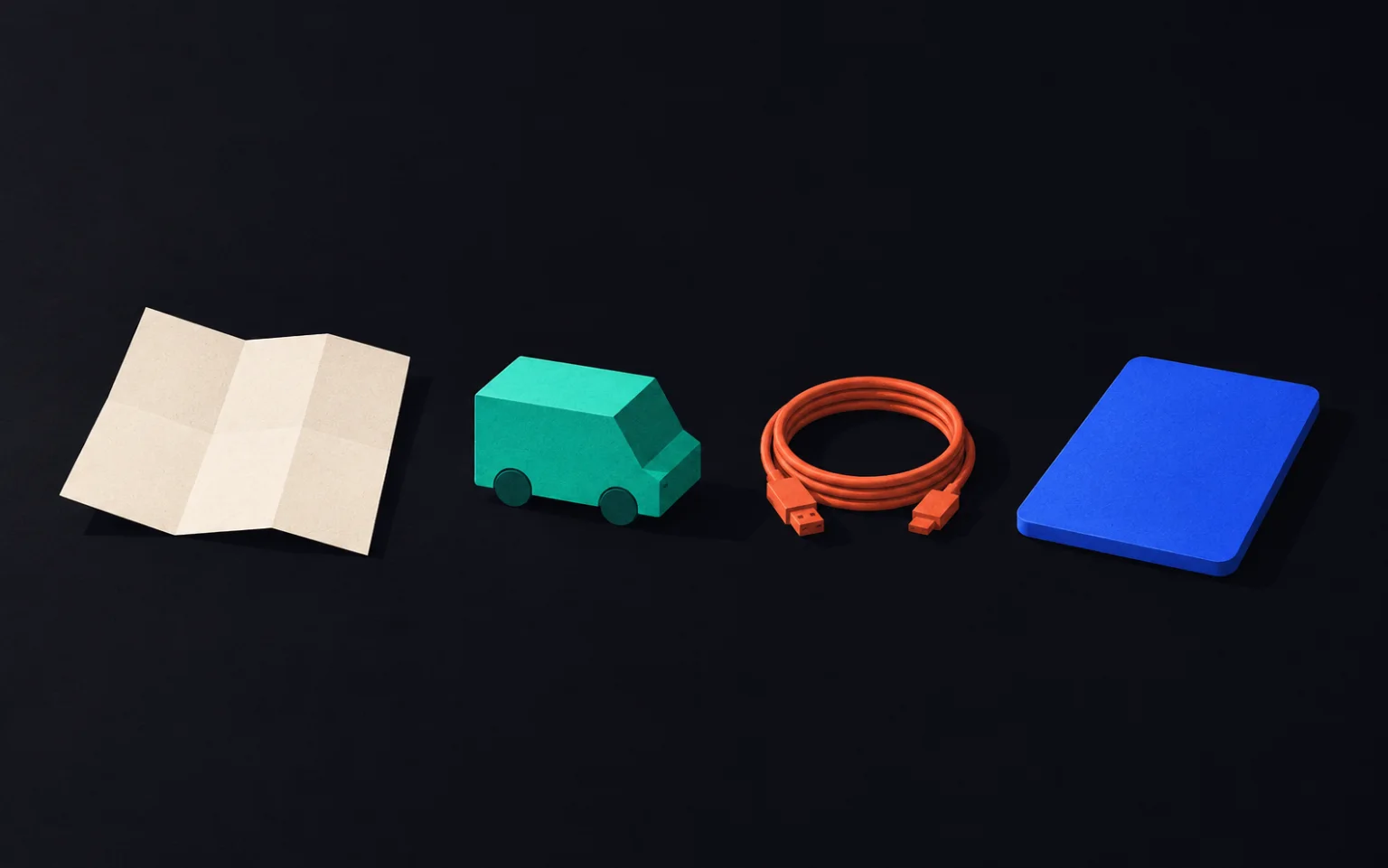
The 14-truck HVAC company.
Six spreadsheets, three inboxes, one dispatcher who knew where everything was.
The pain. Two trucks at the same address. A dispatcher who can't take a Friday off. Quotes dying in an inbox.
The fix. One dispatch board, one customer booking page, invoices created from the job instead of retyped.
- 1
- dispatch board replacing six spreadsheets
- 12.5 hrs
- of admin returned each week (we'd measure it, not guess it)
- 0
- double-booked trucks in month one
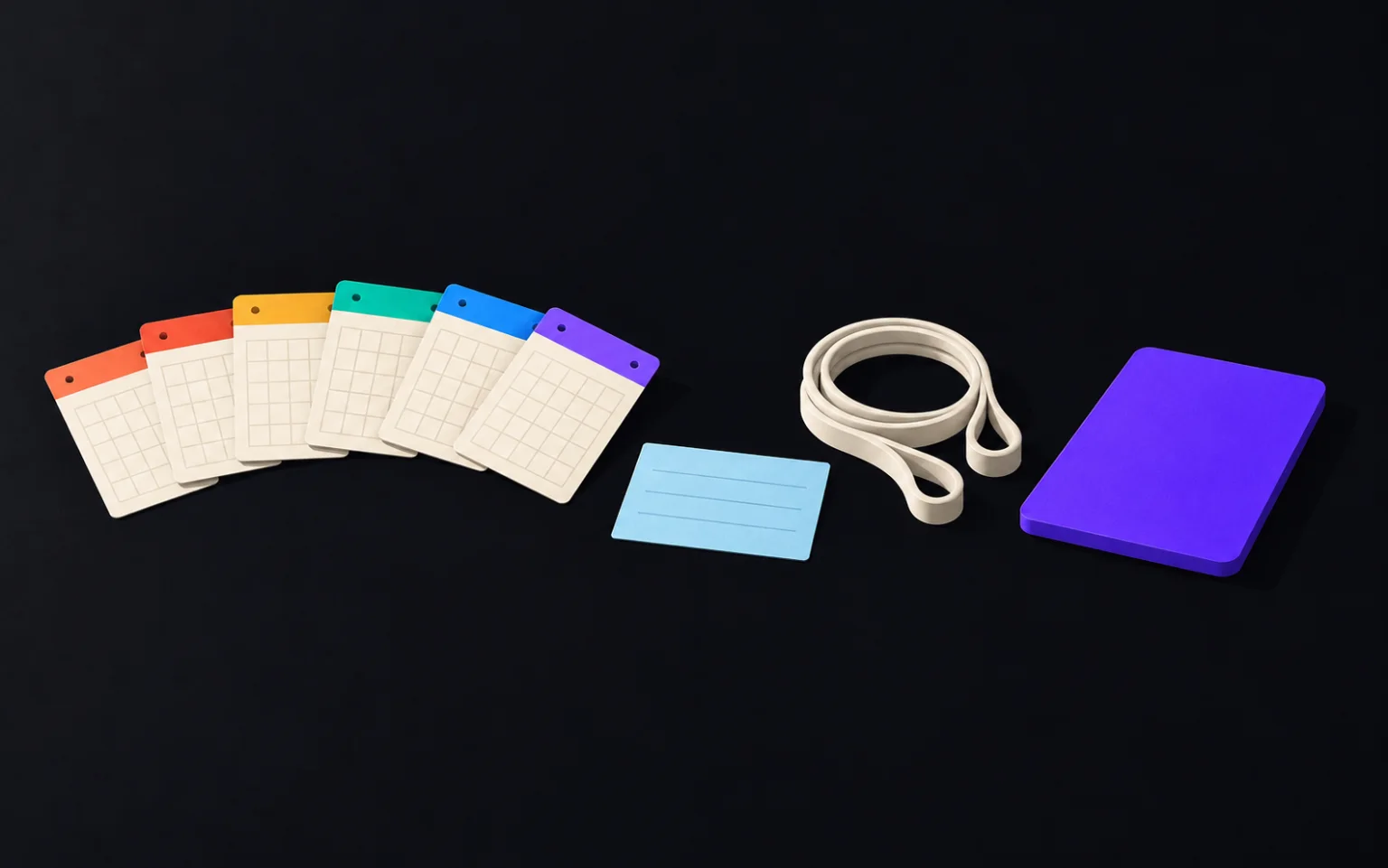
The clinic with six calendars.
Six calendars, one receptionist, and a system that lived in her head.
The pain. Patients hang up before anyone answers. Six calendars disagree. The receptionist is the backup system.
The fix. One booking page that shows real availability, reminders by text, and calendars that finally agree.
- 1
- booking system replacing six calendars
- 37%
- fewer abandoned inquiries
- 9 hrs
- of phone time returned each week
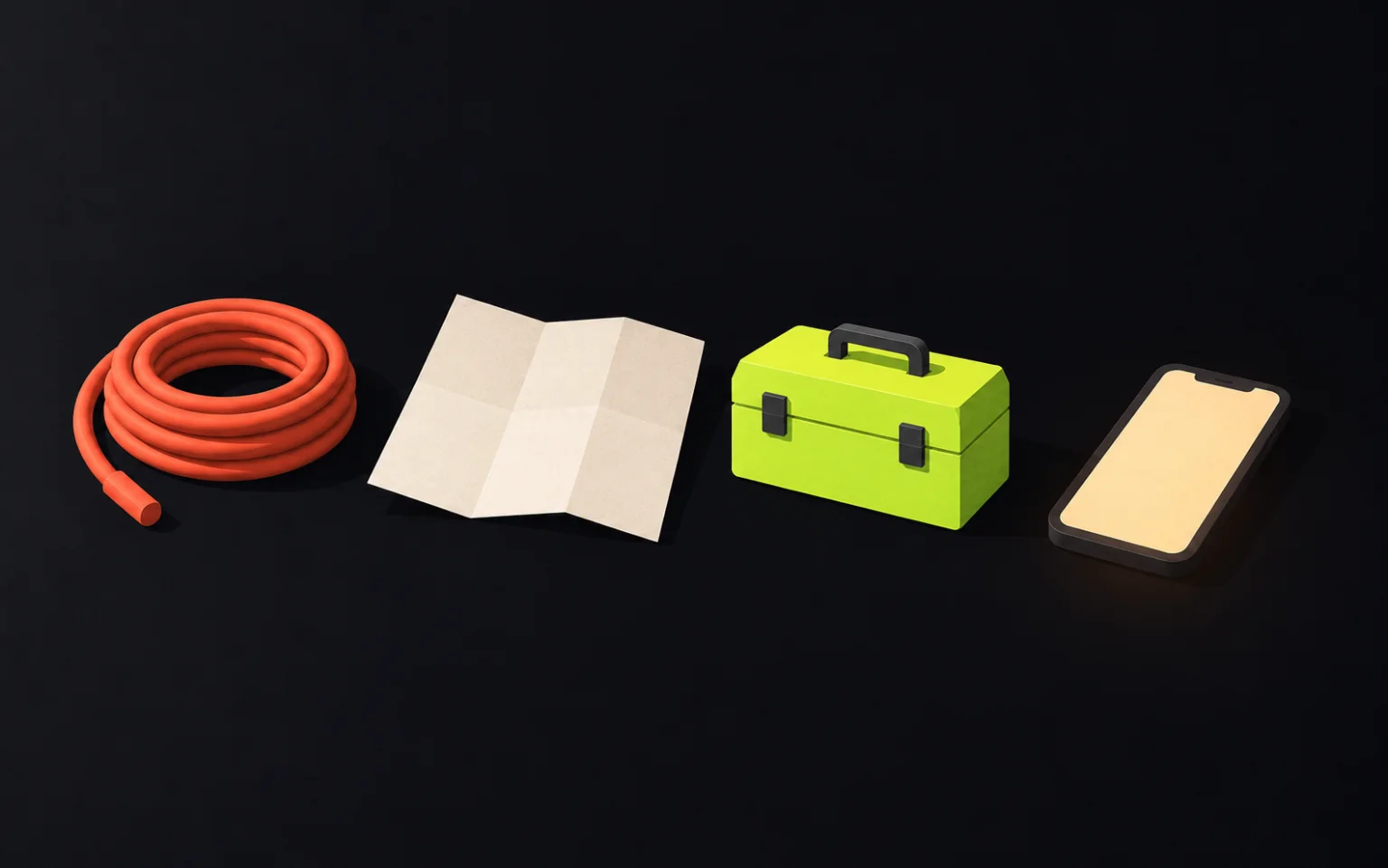
The roofer nobody could find.
An excellent roofer. The website was doing none of the work. The phone rang when it rained.
The pain. The phone only rings after a storm. Quotes get lost in text threads. Nobody can find the business online.
The fix. Three pages that say what he does, and one quote form that asks the right five questions, with photos.
- 2.4×
- inquiry rate
- 1
- quote form that asks the right five questions
- <1 s
- to load, on a phone, on a roof
Made-up examples. The numbers are the targets we'd set and measure, not results we're claiming.
Your tools have a family tree.
Every tool made sense when you bought it. Together they made a maze. We map it, then we shorten it.
Fourteen tools. Ten retired, one rebuilt. We kept the three that were doing their jobs.
Fig. 07. It's quiet now. Good quiet.
Discover. Design. Develop. Deliver.
How we work
-
01
You show us the mess.
We learn how your business actually operates, not how the org chart says it does.
- 02
We figure out what's actually wrong.
Sometimes you need software. Sometimes you need a better form.
- 03
We design something better.
First, how a job gets from the phone call to the paid invoice. Then what the screens look like. In that order.
- 04
We build the thing.
Properly. Tested, documented, yours.
- 05
Everyone pretends the old way never happened.
Screenshots of the old spreadsheet retained for historical purposes.
How much does this cost?
$300 to $125k
Some people need an apple. Some people need the tree.

- From $300Refresh.Focused improvements to the website or process you already have. One-time work, quoted to the agreed scope.
- Quoted to scopeLaunch and Business.Bespoke websites, and the useful connected foundations behind them. Initial project quoted to scope.
- Quoted to scopeSignature and Enterprise.More tailored experiences, and the operational systems underneath them. Initial project quoted to scope.
- From $39/monthKeep it running.Hosting, maintenance and monitoring of what we built. Which plan depends on your package.
A guide, not a quote. CAD. The initial build and the monthly plan are billed separately. See the five packages.
Yes, a real range. No, you don't need to book a call to see it. Yes, the final number goes in writing before we start.
Starting small is fine. Refresh begins at $300, and if an off-the-shelf tool fits you better we will say so.
The monthly plan keeps what we built hosted, maintained and monitored. New features are quoted separately.
Questions people actually ask.
Can you work with the software we already use?
Yes. We prefer not rebuilding perfectly good things for no reason.
Do we need completely custom software?
Probably not. We'll tell you if an existing tool solves it better. We'd rather lose the project than build you something you didn't need.
Can you automate our entire business?
Possibly. Whether that's a good idea is a separate conversation, and we'll have it with you.
Can you build exactly what's in my head?
Probably. The hard part is getting it out of your head. We have a process for that. It involves a whiteboard and patience.
Do you use AI?
Of course. We also use calculators. The important part is choosing the right tool and knowing when not to.
Do you do the boring responsible stuff?
Unglamorous. Non-negotiable. This is the part of the job nobody puts on a homepage, so here it is on the homepage.
| Security | Least-privilege access. Encrypted at rest and in transit. |
|---|---|
| Testing | Automated, before every release. |
| Accessibility | WCAG 2.2 AA, checked with a real keyboard. |
| Backups | On the plans we host. Restore-tested, not just hoped for. |
| Monitoring | Uptime and errors: alerted, not discovered. |
| Performance | Budgets set before design starts. |
| Documentation | Written for the next person, who may be you. |
| Ownership | Your code. Your accounts. Your data. |
Who actually does the work?
Troy, plus a small network of collaborators he's worked with for years, brought in when a project needs them. You'll always know who is on your job.
How long does it take?
A website: 4 to 8 weeks. Automation: 2 to 6 weeks. Custom software: 3 to 6 months, shipped in stages so you're using it before it's finished.
Who owns the code?
You do. Your content, your data, your accounts, and the deliverables built for your project. Licensed third party services and any reusable Curveball tooling are identified separately, and ownership and transition are set out in the project agreement. If we vanished tomorrow, someone else could pick it up. We'd rather you didn't test that.
How do payments work?
Written quote, fixed scope, milestone payments. No surprise invoices.
What happens after launch?
A monthly plan that keeps it hosted, maintained and monitored, or a clean handover. Either way the documentation exists and is written for humans.
What if we're too small?
Then we'll say so, and tell you what to buy instead. For free. It takes ten minutes.
Do you do small things?
Yes. Some of the best projects started as "can you just fix this one form."
Show us the problem.
Twenty minutes. No deck. Bring the spreadsheet.
You'll be talking to Troy. Not a sales team.
Fig. 14. Your inquiry. We'll take it from here.